
Referrals can be one of your organisation’s most trusted routes to new customers. A recommendation from a customer, employee or partner carries context that a conventional advertisement often cannot: someone already knows your organisation, understands the offer and believes another person may benefit from it.
But trust alone does not make a referral programme scalable.
Once a programme moves beyond a small pilot, important operational questions appear. Who made the referral? Which prospect responded? Did that prospect complete the action required to qualify? Which reward rules apply? Has the reward already been issued? Can your organisation explain the outcome to the customer, finance team, risk team and programme owner?
Referral management is the capability that answers those questions. It turns individual recommendations into a measurable, controlled and repeatable route to customer growth.
What is referral management?
Referral management is the process and supporting technology used to configure, track, qualify, reward and measure referrals from one participant to another.
A referral management system connects the people, rules, events and outcomes involved in a referral journey. It typically records:
- the programme and market in which the referral takes place;
- the referrer, such as a customer, employee or partner;
- the referred prospect or customer;
- the unique link, code or invitation connecting them;
- the actions that determine whether the referral qualifies;
- the reward owed to one or both parties; and
- the evidence required for reporting, reconciliation and audit.
In simple terms, referral marketing encourages people to recommend an organisation. Referral management makes those recommendations operationally accountable.
Referral manager or referral management platform?
A referral manager may be the person accountable for programme performance, participant experience and commercial rules. A referral management platform is the software and operating infrastructure that gives that person control: it issues traceable referral identities, connects customer outcomes, applies qualification and reward rules, and produces evidence for reporting.
Enterprise referral programmes normally need both clear ownership and referral management software that can execute policy consistently across products, participants and markets.
Why referral programmes become difficult to manage
A basic referral offer can sound straightforward: invite a friend, let the friend join and reward both people.
The real journey is more complex. A prospect may open an invitation on one device, research your organisation independently, return through a different channel and convert days or weeks later. The qualifying outcome may occur in a separate system. Different products, countries or participant types may require different rules. Rewards may be subject to reversals, limits or verification.
Without a connected management layer, teams often rely on spreadsheets, promotional codes, disconnected campaign tools and manual investigations. This creates familiar problems:
- valid referrals are not recognised;
- the wrong participant receives credit;
- rewards are delayed or duplicated;
- programme performance cannot be tied confidently to customer outcomes;
- suspected abuse is difficult to investigate; and
- every new market or use case requires another operational workaround.
The issue is not simply tracking a link. It is maintaining a reliable connection from the original referral to the verified business outcome.
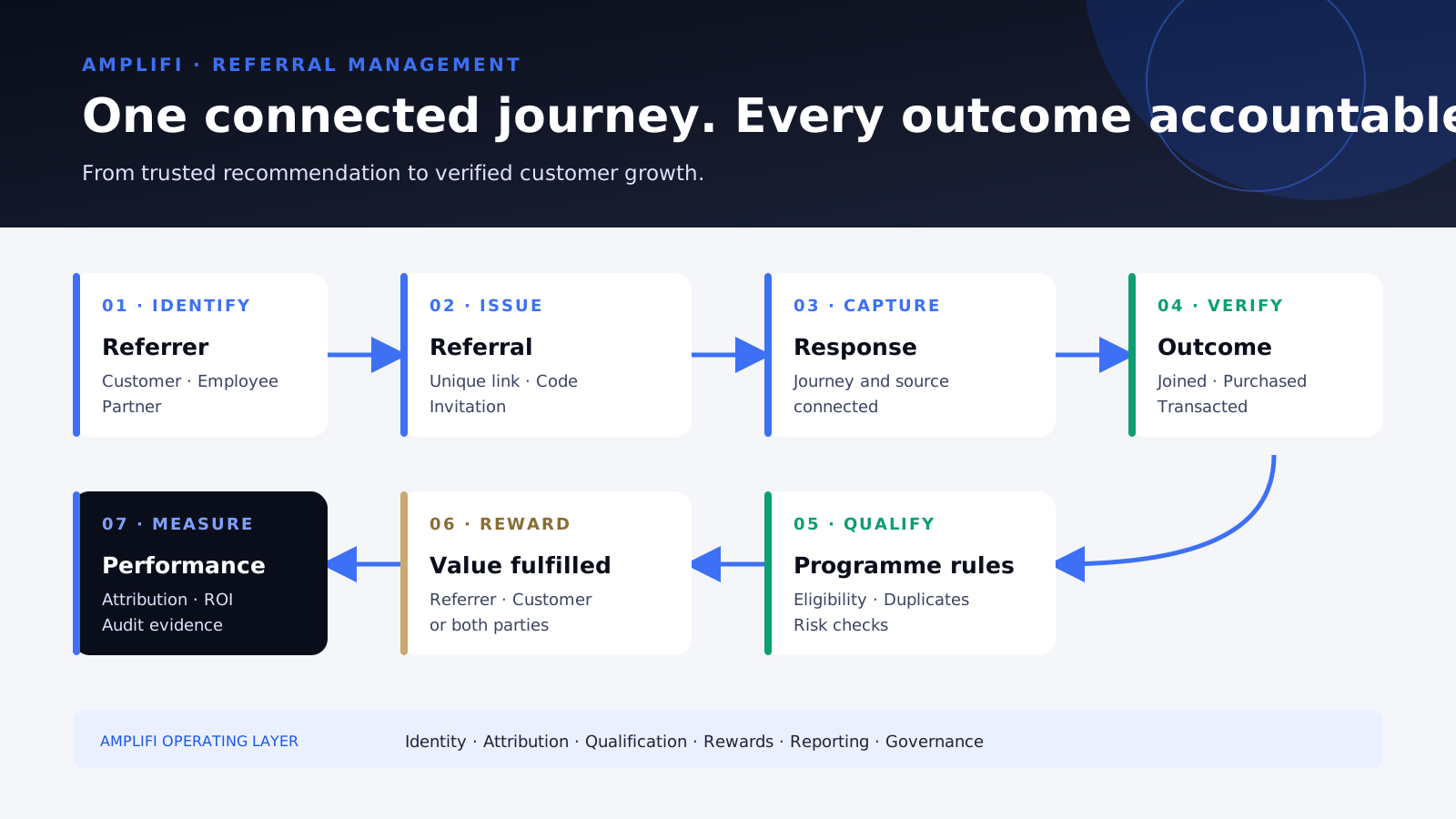
The referral management journey
Although programme designs differ, a governed referral journey usually includes seven connected stages.
1. Configure the programme
The organisation defines who may refer, who may be referred, where the programme operates and what conditions apply. It also establishes start and end dates, participant limits, eligible products, reward structures and exception rules.
This policy layer matters because a customer referral in South Africa may not follow the same commercial, currency or operating rules as an employee referral in the United States.
2. Identify the referrer
Each eligible participant receives a traceable way to refer, normally through a unique link, code or invitation. This identity should remain connected to the programme, campaign, market and participant type.
A shared generic promotion code may record that an offer was used. It does not necessarily prove who created the referral or whether that person was eligible for a reward.
3. Capture the referral
When the prospect responds, the system records the referral signal and connects it to the relevant journey. Depending on the programme, this could begin with a link click, code entry, form submission, assisted introduction or another approved event.
Good capture design also plans for real customer behaviour. People change devices, pause journeys and interact with other channels before converting.
4. Connect the outcome
A referral becomes commercially meaningful when it produces a defined outcome. That outcome might be an approved account, an activated service, a first transaction, a completed purchase or another high-value event.
The referral management layer must connect that event back to the correct participant and programme. This is referral attribution: the evidence-based assignment of an outcome to the referral route that produced it.
5. Qualify the referral
Not every response should trigger a reward. Qualification rules determine whether the participants and outcome satisfy the programme policy.
Checks may include customer eligibility, duplicate referrals, cancellation periods, minimum transaction values, account status, geographic restrictions and indicators of suspicious behaviour. Qualification protects programme economics while giving legitimate participants a consistent experience.
6. Apply and fulfil the reward
Once qualified, the system applies the appropriate reward instruction. The referrer may earn, the referred customer may earn, or both parties may receive value. Rewards can include cash, points, discounts, vouchers, account credits or brand-specific benefits.
The reward record should show what was earned, why it was earned, its status and whether an adjustment or reversal occurred.
7. Measure and improve
Programme owners need more than a count of invitations or clicks. They need to understand which routes create qualified customers and sustainable value.
Useful measures can include:
- invitations issued and shared;
- referred prospects and completed outcomes;
- qualification and rejection rates;
- time from referral to outcome;
- cost per qualified referral;
- reward liability and fulfilment status;
- performance by source, product, campaign and market; and
- customer value generated through the programme.
These measures allow your organisation to improve programme rules, participant experiences and investment decisions over time.
Referral tracking and referral attribution are not the same
The terms are sometimes used interchangeably, but they solve different parts of the problem.
Referral tracking records activity along the journey: a link was created, an invitation was shared, a code was used or a prospect registered.
Referral attribution determines which referral should receive credit for a verified outcome under the programme’s rules.
Tracking produces signals. Attribution connects those signals to a decision.
This distinction matters when several influences appear in the same customer journey. A prospect could receive a referral, click a paid advertisement and later visit the website directly. A governed programme needs an explicit attribution policy rather than an improvised decision after the conversion.
What should referral management software do?
Enterprise referral management software should support the full operating journey, not only link generation or reward fulfilment.
Core capabilities should include:
- Programme configuration — rules for eligibility, markets, products, time periods, limits and qualifying events.
- Participant identity — a reliable connection between referrers, referred customers and their roles.
- Traceable distribution — unique links, codes and invitations tied to the correct programme context.
- Event integration — the ability to receive customer and transaction outcomes from relevant systems.
- Attribution and qualification — consistent rules for assigning credit and validating genuine outcomes.
- Flexible rewards — support for one-sided or two-sided value in the required reward form and currency.
- Controls and audit evidence — visible decisions, statuses, exceptions and history.
- Reporting — performance views that connect activity to qualified customer growth.
- Integration — controlled data exchange with customer, transaction, marketing, reward and reporting systems.
- Multi-market governance — the ability to configure local rules without fragmenting the operating model.
The goal is one accountable system of record for the referral journey.
Governance should be designed into the programme
Referral programmes handle customer identities, behavioural events and financial or non-financial rewards. Governance cannot be added as an afterthought.
Before launch, your organisation should establish:
- a documented eligibility and attribution policy;
- clear reward terms and exception rules;
- appropriate privacy, consent and data-retention controls;
- segregation of duties for programme changes and reward approvals;
- processes for duplicate, disputed or suspicious referrals;
- reconciliation between qualified outcomes and fulfilled rewards; and
- reporting responsibilities across marketing, product, finance, operations, risk and compliance.
Disclosure requirements may also apply where participants receive value for endorsements or recommendations. For example, the US Federal Trade Commission advises that material connections that could affect how an endorsement is evaluated should be disclosed clearly. Requirements vary by market and programme, so you should obtain advice appropriate to your jurisdiction and use case.1
How to evaluate whether your organisation needs referral management
A dedicated capability becomes increasingly valuable when:
- referrals operate across several products, brands or markets;
- customers, employees and partners participate under different rules;
- a qualifying event occurs after registration or in another system;
- both the referrer and referred customer can earn rewards;
- manual reward approval or reconciliation is creating delays;
- teams cannot explain why a referral was accepted or rejected;
- programme owners lack a reliable view of qualified customer outcomes; or
- your organisation wants to scale referrals without multiplying operational risk.
The key question is not whether your organisation can create a referral code. It is whether you can operate referrals as a trusted and measurable route to customers.
How we support referral management
We provide a governed operating layer for managing referrals across participants, programmes, markets and customer journeys.
The platform connects:
- customers, employees and partners with traceable referral identities;
- links, codes and invitations with the programmes that issued them;
- customer events with attribution and qualification rules;
- one-sided or two-sided rewards with the correct participant, reward form, currency and market;
- programme decisions with reporting and audit evidence; and
- referral activity with measurable customer outcomes.
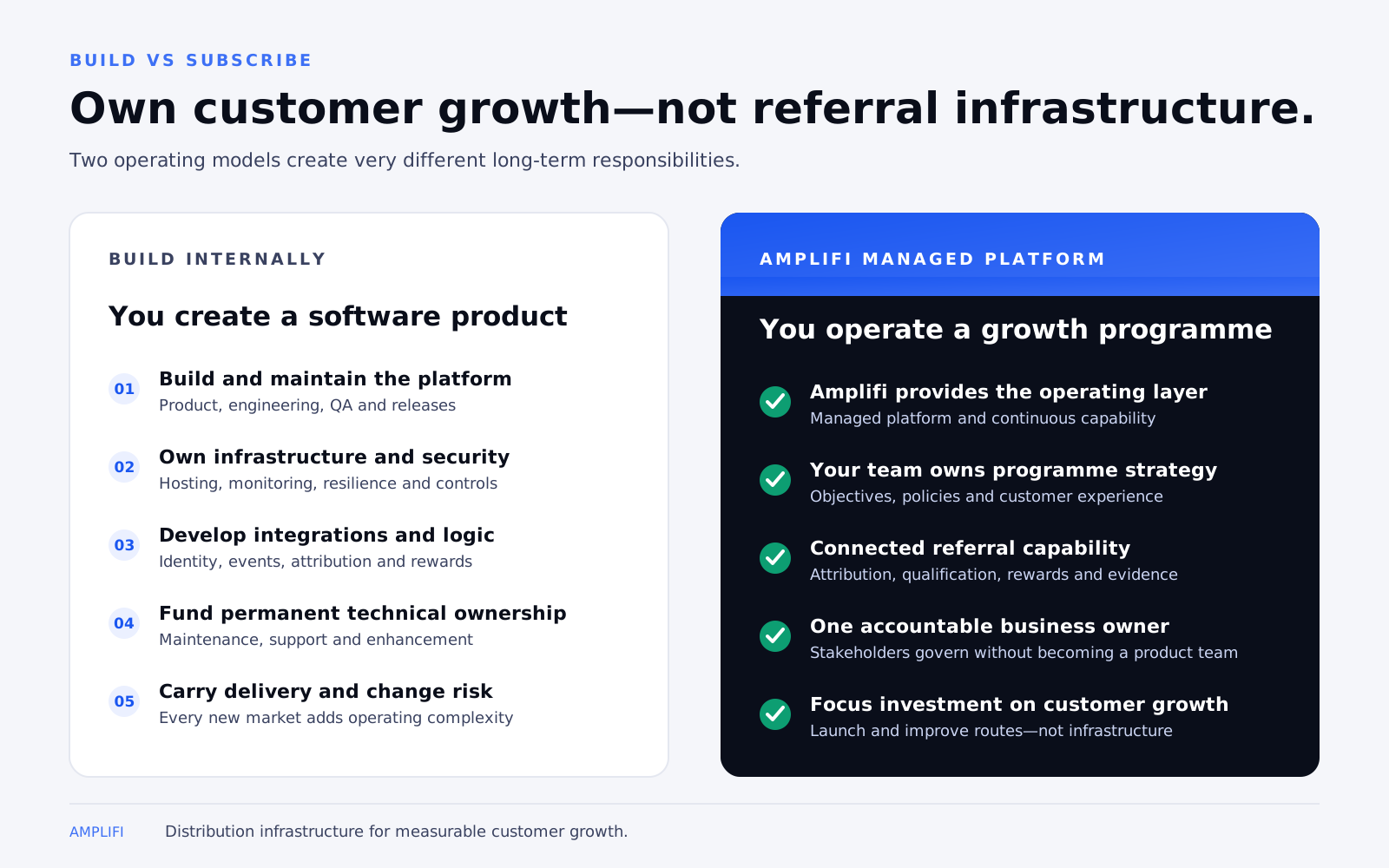
We give your organisation an alternative to designing, building and maintaining referral technology internally. With our managed software model, you retain control of your programme strategy, commercial objectives, policies and customer experience, while we provide the underlying referral management and attribution capability.
The result is a clearer division of responsibility. Internal teams can concentrate on customer growth and programme performance without becoming responsible for the long-term product, engineering and infrastructure burden of an internally built platform.
From campaign to customer-growth capability
The most effective referral programmes are not isolated promotions. They are part of a broader distribution capability.
When identity, attribution, qualification, rewards and evidence operate together, your organisation can learn which customers, partners, offers and markets create meaningful growth. Successful journeys become repeatable. Underperforming routes can be adjusted. New programmes can reuse a governed foundation instead of rebuilding the same infrastructure.
That is the strategic value of referral management: it converts trust into a route to customer, and that route into an accountable operating capability.
We connect referrals, campaigns, partners and channels to measurable customer outcomes. Run a referral scenario or discuss your distribution strategy with us.
Frequently asked questions
What is a referral management system?
A referral management system is software that configures and operates referral programmes. It connects participants, referral links or codes, customer events, attribution decisions, qualification rules, rewards and performance reporting.
What is the difference between referral marketing and referral management?
Referral marketing focuses on motivating and communicating with people who may recommend an organisation. Referral management provides the rules, tracking, attribution, reward operations and evidence required to run those recommendations at scale.
How are referrals tracked?
Referrals are commonly tracked using unique links, codes, invitations or recorded introductions. These identifiers connect the referrer to a prospect and programme. The tracking record must then be connected to a qualifying customer outcome.
What is referral attribution?
Referral attribution is the process of assigning a verified customer outcome to the referral that produced it, according to predefined programme rules. It goes beyond recording a click or code by establishing which referral receives credit.
Should both participants receive a reward?
Not necessarily. Your organisation should not be locked into a single reward structure when different campaigns serve different objectives.
A one-sided reward may be appropriate for day-to-day referral activity, where the aim is to recognise the referrer while managing programme cost. A two-sided reward can be introduced for a product launch, market-entry campaign or adoption drive, creating an immediate reason for both the referrer and the referred customer to participate.
The right structure may therefore vary by campaign, customer segment, product, market or time period. What matters is that each configuration is explicit, financially sustainable and consistently applied within that campaign. Connected attribution then allows your organisation to compare outcomes and understand which reward structure contributes most effectively to its growth objectives.
Which teams should own a referral programme?
A referral programme should have one accountable business owner, often within growth, marketing, partnerships, customer experience or product. Other stakeholders can contribute requirements and oversight without becoming part of a large permanent referral team.
The operating model depends on how the technology is provided. When you build referral technology in-house, your organisation must fund and coordinate ongoing product management, engineering, quality assurance, infrastructure, security, compliance, integrations and operational support. You are effectively creating and maintaining your own software product.
With our managed software platform, the technical platform ownership sits with us. Your organisation defines its commercial objectives, programme rules, risk requirements and customer experience, while we provide the infrastructure for referral identity, tracking, attribution, qualification, rewards, reporting and governance.
References
- US Federal Trade Commission, Advertisement Endorsements and Disclosures 101 for Social Media Influencers.